Showing posts with label Maharastra. Show all posts

Monday, 6 November 2017

Shivaji Maharaj Museum


At a distance of 5.5 km from Aurangabad Railway Station, Chhatrapati Shivaji Museum is located near Nehru Bal Udyan in Aurangabad. This is one of the best tourist attractions in Aurangabad.

The museum is dedicated to Chhatrapati Shivaji Maharaj, the great Maratha ruler. Founded by the Municipal Corporation of Aurangabad, the cost of the museum is around 194 lakhs. The building has a total of 6 exhibition halls. A visit to this museum takes visitors back into the days of Maratha valor and their love for their homeland.


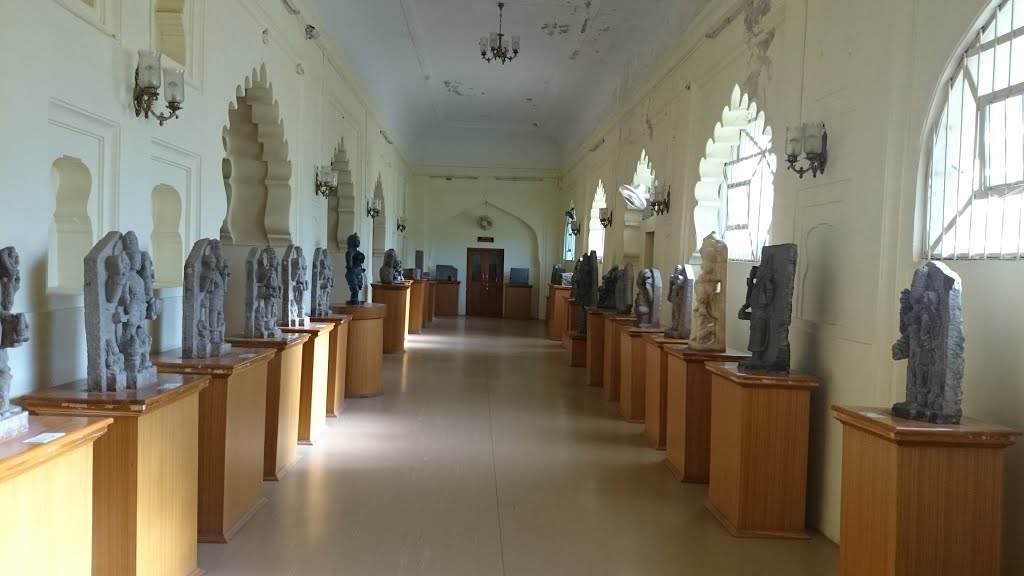
The exhibits on display tell stories of the glorious reign of the brave king, showcased in six galleries. The display comprises Maratha war weapons and other artifacts from the battlefield of some of the most popular wars that the Marathas fought. The main exhibits here include the 500 year old war suit, a copy of the Aurangzeb's handwritten Quran, and a 400 year old Paithani sari.


The first hall is decorated with the wooden craft which reminds us the glorious past. The second hall is full of sword shields and ancient rifles. In the next hall photographs and transparencies of forts like Torana, Lohagad, Panhalgad, Sinhagad are displayed. One can see the advanced architectural beauty of the forts. The fourth hall consists of vessels used by the people contemporary to the great King Shivaji Maharaj. There is a separate space provided for the exhibition of coins. These coins are rare. The coins were used by Satavahana Dynasty. Looking at the display, visitors can also get a detailed idea of the lifestyles of the people of Shivaji Maharaja's era.


Timings: 10.30 AM - 6 PM on all days.


Soneri Mahal / Sunheri Mahal

At a distance of 2 km from Bibi Ka Maqbara and 6 km from Aurangabad Railway Station, Sunheri Mahal is a palace located at the foothill of the Aurangabad Caves in the Paharsingpura area of Aurangabad. It is one of the top places to visit in Aurangabad.


Soneri Mahal was built by a Bandalkand chief who accompanied Aurangzeb into the Dakhan. The Mahal was built between 1651 AD and 1653 AD at a cost of Rs.50, 000 and in 1934 AD it was sold to the Nizam of Hyderabad for Rs.26, 400. The Mahal is named after the paintings in the palace that were once painted in gold.

It is a grand two stored building constructed in typical Rajput style. The palace is made up of lime and stone. Sprawling over two storeys, the palace stands as a testimony of Indian architectural splendor with some intricate decorations all over. A well-manicured garden adds to its beauty. The entrance of the Palace is decorated with beautifully done arches.

This ancient historic monument is now transformed into a museum. It was set up in 1979 and exhibits the remnants of regional palaces, antique items, coins, ancient Indian Pottery, paintings and many more alluring items. The museum also displays some major reliefs and sculptures found in the local excavations. This museum is placed in the campus of Dr. Babasaheb Ambedkar Marathwada University.


The palace is the venue for the Aurangabad Festival, where musicians and dancers perform their art. During the festival, the regional artisans also put up many stalls to sell their artifacts. The Aurangabad festival is clubbed with Ellora festival and celebrated in the month of December.

Entry Fee: Rs. 10 for Indian and Rs. 100 for Foreigner.


Timings: 9 AM to 5 PM on all days except Mondays.


Jayakwadi Dam

At a distance of 47 km from Aurangabad, the Jayakwadi Dam is an earthen dam built across the sacred Godavari River at Paithan village in Aurangabad district of Maharashtra. It is one of the largest earthen dams of Maharashtra and is one of the best in Aurangabad tourist places.

The foundation of the dam was laid by the then Prime minister of India Lal Bahadur Shastri on 18th October 1965. The dam was inaugurated on 24th February 1976 by the then Prime Minister Indira Gandhi. The chief engineer of this project was Mr. A.A.A. Siddiqui. Its height is approximately 41.30 m and length of 10 km with total storage capacity 2,909 MCM (million cubic meters) and effective live storage capacity is 2,171 MCM. The total catchment area of dam is 21,750 Sq. km. There are total 27 gates for the dam.


Jayakwadi Dam or Paithan Dam is constructed over the sacred river Godavari and is the major source of water supply to the Aurangabad city. Nath Sagar Jalashay is the name of the reservoir formed by Jayakwadi Dam. Fed by the Godavari and Pravara rivers the reservoir is about 55 km long and 27 km wide and spans over 350 Sq. km. Total submergence area due to the reservoir is approximately 36,000 hectares. Unfortunately siltation has taken a heavy toll on the project. It is estimated that approximately 30% of the dam is filled with silt, reducing its life as well as storage capacity.

Jayakwadi project is used mainly to irrigate agricultural land of drought-prone region of Marathwada. Other important purpose was to provide water for drinking and industrial usage to nearby towns and villages and to the municipalities and industrial areas of Aurangabad and Jalna. The 80% of water of dam is meant for irrigation, 5-7% for drinking water and the rest for industrial purposes. Jayakwadi Dam houses a hydroelectric power plant with installed power generating capacity of 12 MW. The dam is also a primary source of water to the Parli Thermal Power Station.

Dnyaneshwar Udyan is one of the largest gardens in Maharashtra resembling the Brindavan Gardens of Mysore. It is spread over 125 hectares and is situated on the banks of Nath Sagar Lake formed due to Jayakwadi Dam. Jayakwadi Bird Sanctuary, sprawls across the backwaters of Nath Sagar reservoir, houses variety of flora and fauna. A wide range of resident and more than 70 species of migratory birds can found in the vicinity. Some of them include Siberian migratory birds, Flamingos, Porchards, Cranes etc. The ideal time to visit the place is from October and March.

Dnyaneshwar Udyan Timings: 5.30 AM to 11 PM

Dnyaneshwar Udyan Entry Fee: Rs. 10 per Person


Siddharth Garden & Zoo


At a distance of 3 km from Aurangabad Railway Station and 4 km from Bibi Ka Maqbara, Siddharth Garden is a sprawling garden, park and zoo together situated at Samarth Nagar in Aurangabad City. This is one of the popular picnic spots in Aurangabad and is mostly crowded on evenings especially on weekends.


Siddharth Garden is a landscaped garden spread over a large area and it has a green outlook. The garden has 2 parts - one a garden with lawns and another one is a small zoo. The garden also has a small aquarium, though the major attraction of the tourist is the Siddharth Garden Zoo. The zoo is the abode of a number of wild animals like tigers, lions, leopards, Civet cats, snakes (snake house), crocodiles, emu, fox, deer, hyena, etc. It was quite an enjoyable visit with the children. A musical fountain and statue of Buddha are also adorning this park.

Garden Timings: 10 AM to 7 PM on all days except on Tuesdays.


Entry Fee: Rs. 5 for Adults & Rs. 2 for Children


Panchakki


At a distance of 2 km from Bibi Ka Maqbara and 4 km from Aurangabad Railway Station, Panchakki is a water mill located in the complex of Baba Shah Musafir Dargah of Aurangabad.

Also called as Nehar-e-Panchakki, Panchakki was built in the early years of the 17th century by Baba Shah Musafir. Comprising of the medieval Indian architecture, the water mill runs on scientific principles. Setup with an aim to generate electricity from water brought down from a spring, the Panchakki water-mill was used to grind grains for the pilgrims who visited the Dargah.

The source of continuous water supply to the mill is an underground stream which begins from a well above the Harsul River with a tributary stream. The water flows down through clay pipes based on the Siphon System. The water on reaching the Panchakki reservoir is made to drop from a height to generate electricity and run the mill, and eventually the excess water is put in the Kham River. The tank lies in front of the mosque whose bottom forms the roof of a spacious hall.


Panchakki is one of the few places that are calm and peaceful in Aurangabad which helps to visualize the life that existed during the medieval period in India. Panchakki also has a tomb of Baba Shah Musafir, who was a Sufi Saint and was the spiritual adviser to Aurangzeb. There is a huge tree which is almost 300 years old inside the complex near the tank. There is a Masjid which dates back to 17th century in the neighbourhood.


Timings: 7 AM to 6 PM.


Pitalkhora Caves


At a distance of 18 km from Kannad and 77 km from Aurangabad, the Pitalkhora Caves are an ancient rock cut caves located on Chandora hill near Ambala village in Aurangabad district of Maharashtra.


Pitalkhora consisting of 14 Buddhist Caves and are believed to be one of the earliest of the rock cut cave structures in the vicinity. It is believed that Pitalkhora Caves belongs to 2nd century BC. They are cut in a variety of basalt rock which weathers faster in contrast to other parts in Maharashtra. All the caves belong to the Hinayana period but the painting executed in the caves are of Mahayana period. The caves boast paintings, many sculptures, animal motifs, miniature chaitya windows, wonderful Yaksha figures, the elephants, dwarapalas and mithuna figures. The sculptural representations here are similar to that of found in the stupas of Sanchi, Karla, Nasik, of the same period.

The caves are in two groups, one is a cluster of 10 caves and the second of 4 caves. Out of the 14, four are chaityas (one housing votive stupas, one apsidal and single-cell) and the rest are viharas. The 1st cave, which has been damaged, was used as a monastery or vihara. The 2nd, 3rd and 4th caves have similar courtyards and seem to belong to the same period.


The Cave 3 has the best paintings and there are 37 pillars that separate the aisle from the hall. The inscriptions on each pillar indicate that they were added individually over a period of time by rulers of Paithan. The original complete pillars demonstrate beautiful painting fragments of the Ajanta style. Many images of standing and seated Buddhas are clearly visible even today. There are steps that lead down to a basement where there are many carvings and a stupa which houses many rare crystals. Cave 4 contains carvings of elephants and horses, also inscriptions left by donors. Cave contains also a carved panel depicting Buddha as a prince who is leaving his palace.

Pittalkhora Caves are located in remote, deep, wild river valley. One has to descend steep steps in deep valley and cross an iron bridge, admiring the beautiful scenery along the path. This area looks especially beautiful during the rainy season, when the stream and waterfalls are full with water and soil is covered with lush greenery.


Timings: 8 AM to 5 PM


Ghrushneshwar / Grishneshwar Jyotirlinga Temple

At a distance of 1 km from Ellora Caves and 29 km from Aurangabad Railway Station, Grishneshwar or Ghrushneshwar Jyotirlinga Temple is a famous Hindu temple located at Verul village in Aurangabad district of Maharashtra. It is one of the 12 Jyotirlinga shrines mentioned in the Shiva Purana and also one of the famous places of pilgrimage in Maharashtra. This is one of the top places to visit in Aurangabad City and also one of the popular places to visit in Ellora.


The temple is dedicated to Lord Shiva. Grishneshwar Temple is believed to be the last or 12th Jyotirlinga on the earth. The presiding deity, in the form of Jyotirlinga, is known by several names like Kusumeswarar, Ghushmeswara, Ghrushmeswara and Grishneswara. The Grishneshwar temple was re-constructed by Maloji Raje Bhosale, the grandfather of Chhatrapati Shivaji Maharaj, in the 16th century. Later, the temple was again reconstructed in the 18th century by Rani Ahilyabhai Holkar, a Maratha princess who ruled Indore from 1765 CE to 1795 CE.

According to the legend, In the Devagiri Mountain, there lived a Brahmin couple named Brahmavetta Sudharm and Sudeha. They had no children and according to the wish of Sudeha, Brahmavetta married her sister Ghushma. On the advice of Sudeha, Ghushma used to make 101 lingas, worship them and discharge them in the nearby lake. With the blessing of Lord Shiva, she gave birth to a son. Out of jealously, on night Sudeha killed the baby and threw him in the lake where Ghushma used to discharge the lingas. Mourning with pain Ghushma continued worshipping the Shivlinga. When she dipped the Linga in water Lord Shiva appeared in front of her and gave life to her son. Since then Lord Shiva is worshipped in the form of Jyotirlinga Ghushmeshwar.


This 240 x 185 feet tall cubicle shaped shrine, built of red volcanic rock is a fine example of medieval architecture with beautiful carvings, attractive friezes and sculptures of Indian Gods and Goddess. The temple consists of a garbhagriha, an antarala and a sabha mandapa. Grishneshwar Temple is noted for its 5 tier shikara and carvings on the pillar. A golden spire or a kalasha tops the temple. Another specialty is the holy water, which flows from inside the temple.

Maha Shivaratri is a very important religious festival celebrated here. This could be the best time to pay a visit to visit this temple.

Timings: 5.30 AM to 9.30 PM.

Bibi Ka Maqbara


At a distance 5.5 km from Aurangabad Railway Station, Bibi Ka Maqbara is a beautiful mausoleum situated in Aurangabad. Maintained by Archeological Survey of India, Bibi Ka Muqbara is one of the top tourist places to visit in Aurangabad.

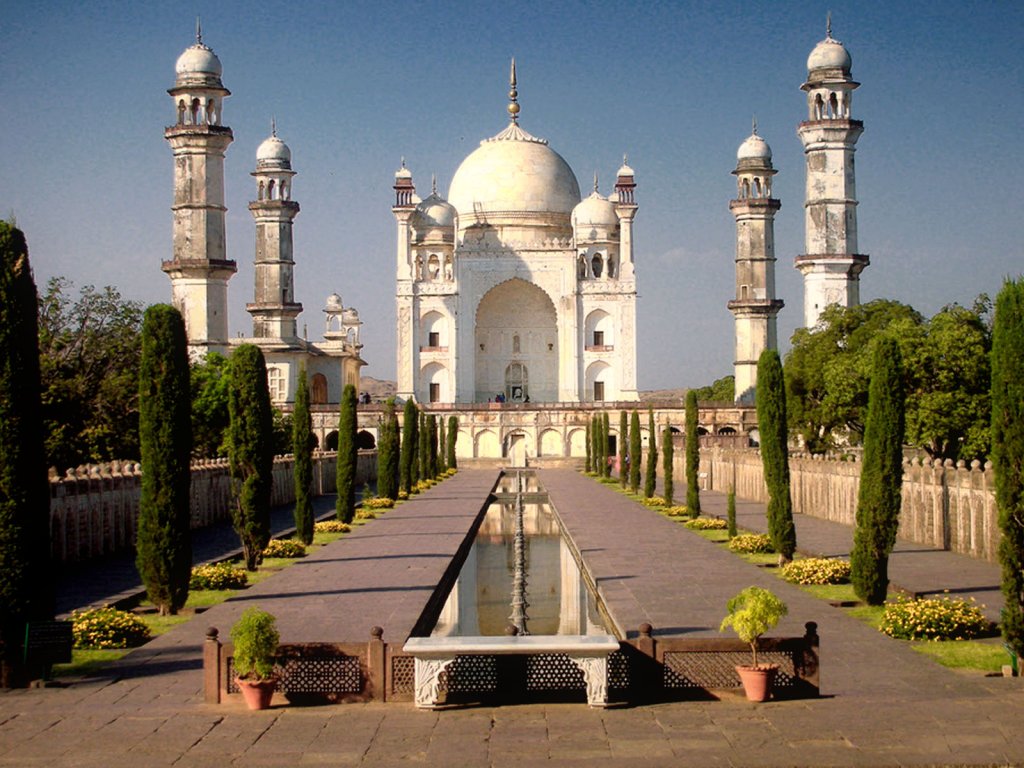
The Bibi-Ka-Maqbara is dedicated to Rabia-ul-Daurani alias Dilras Banu Begum, the wife of Mughal Emperor Aurangzeb. Aurangzeb's son, Prince Azam Shah built the mausoleum between 1651 AD and 1661 AD in the memory of his mother Begum Rabia Durani. This mausoleum is a replica of the world famous Taj Mahal. Also known as Mini Taj, the mausoleum is far less ornamental than Taj Mahal in Agra.

An inscription found on the main entrance door mentions that this mausoleum was designed and erected by Ata-ullah, an architect and Hanspat Rai, an engineer respectively. The marble for this mausoleum was brought from mines near Jaipur. Despite the layout and surrounding of the tomb is very much similar to Taj Mahal, somehow the architecture fails to produce the magic of the Taj. Hence, it is considered to be a poor imitation of the Taj Mahal.

The mausoleum is laid out in a Charbagh formal garden. It stands at the centre of a huge enclosure measuring approximately 458 m x 275 m and is surrounded by high walls with bastions set at intervals, and open pavilions on three sides. The mausoleum is built on a high square platform with four minarets at its corners, which is approached by a flight of steps from the three sides. A mosque is found to the west of the main structure, a later addition by the Nizam of Hyderabad. The narrow walkway from the main gate has a series of fountains at the centre and is flanked by lush green gardens.


Like Taj Mahal, this impressive monument has a central dome, surrounded by four smaller domes. Four small minarets near the main structure while four larger minarets at its corners. The mausoleum is encased with marble up to the dado level. Above the dado level, it is constructed of basaltic trap up to the base of dome; the latter is again built of marble. A fine plaster covers the basaltic trap and given a fine polished finish and adorned with fine stucco decorations. The mortal remain of Rabia-ul-Daurani is placed below the ground level surrounded by an octagonal marble screen with exquisite designs, which can be approached by a descending flight of steps. The roof of this chamber that corresponds to the ground level of the mausoleum is pierced by an octagonal opening and given a low barricaded marble screen. Thus the tomb can also be viewed from the ground level also through this octagonal opening. The mausoleum is crowned by a dome pierced with trellis works and accompanying panels decorated with flower designs.

MTDC organizes a fair every October as the Bibi Ka Maqbara festival. There is an archaeological museum located just behind the mausoleum, which houses rare collection of artifacts and articles of personal use from the times of the Mughal era.


Entry Fee: Rs.10 for Indians and Rs. 250 for Foreigners.


Devagiri / Daulatabad Fort

At a distance of 16 km from Aurangabad Railway Station, Daulatabad is an ancient hill fort situated on the way to Ellora Caves from Aurangabad in Maharashtra. Daulatabad Fort is one of the best preserved Forts in Maharashtra and also one of the best in Aurangabad tourist places.


The historical triangular fort of Daulatabad was built by Yadava king Bhillama V in 1187 AD. The city was then called 'Deogiri', meaning the hill of gods. Daulatabad or 'the abode of wealth' was the name given by Muhammad-bin-Tughlaq when he made his capital here in 1327 AD. The region and the fort passed on into the hands of Bahamani rulers under Hasan Gangu in 1347 AD and Nizam Shahis of Ahmednagar in 1499 AD. Daulatabad became the capital of Nizam Shahi dynasty in 1607 AD. The fort passed several hands, captured and re-captured by the Mughals, Marathas, Peshwas and finally placed under the control of the Nizams of Hyderabad in 1724 AD till independence.

Daulatabad Fort was one of the most powerful forts during the medieval period. Built on a 200 m high conical hill, the fort was defended by a moat and a glacis. The fortifications comprise three encircling walls with bastions at regular intervals. The moat is 40 feet deep with mechanical drawbridges and filled with crocodiles. The entire fort complex consists of an area measuring approximately 94.83 hectares. The combination of hill and land fort is divided into small sectors encircled by fortification walls. The fortified Ambarkot is planned for common people. Mahakot area having four distant lines of enclosure walls served the residential area for higher class of the society. The Kalakot is the royal residential area with double line of fortifications.


The fort was enlarged and structures were added subsequently as the fort passed on from one hand to the other. It consists of structures like stepped wells, Kacheri (Court) building, Bharat Mata Temple, Hathi haud, Chand Minar, Aam Khas, Royal Hammam, Chini Mahal, Rang Mahal, Andheri, Baradari, water cisterns and 10 unfinished rock cut caves belonging to the Yadava period. Chand Minar is a soaring tower inside the Daulatabad Fort, which rises to a height of approximately 30 m. It was erected in 1447 AD by Ala-ud-din Bahmani to commemorate his capture of the fort. The four-storied tower was adorned with glazed tiles and carved motifs. It is believed that Chand Minar was used as a prayer hall or a victory monument in the earlier times. Baradari was the favorite summer residence of the Mughal emperors.

Devagiri is in the outskirts of Aurangabad. There are many buses, cabs and autos are available from Aurangabad to Daulatabad Fort. It takes 3 hours to visit major parts of the fort. There is lot of walking / trekking inside the fort and is suitable for physically active visitors.

Timings: 9 AM to 6 PM.


Entry Fee: Rs. 10 for Indians and Rs. 100 for Foreigners.


Aurangabad Caves


At a distance of 3 km from Bibi Ka Maqbara and 8 km from Aurangabad Railway Station, the Aurangabad Caves are 12 artificial rock-cut Buddhist Caves located on a hill running roughly east to west in Aurangabad. Sculptural carvings of Aurangabad Caves can be compared to the best paintings of Ajanta and is one of the the popular Aurangabad tourist places.

The first reference to the Aurangabad Caves is in the great chaitya of Kanheri Caves. The caves are datable from circa 2nd - 3rd century AD to 7th century AD. The Aurangabad Caves were dug out of comparatively soft basalt rock during the 6th and 7th century. The caves are divided into three separate groups depending on their location. The first group of caves consists of cave number 1, 2, 3, 4 and 5, the second group comprises of cave number 6, 7, 8 and 9, while the last and the third group is made up of cave number 10, 11 and 12. The distance between the first and second group of caves is approximately 500 m. The first group of caves is situated on the western side of a hill, while the second group lies on the eastern side of the same hill. The third group of caves, outside the Aurangabad city, is located to the east of the second group.


Cave 1 & Cave 3 are the earliest excavations here and are probably date back to 2nd - 3rd century AD. The first clusters of Caves, also known as Cave 1, are the incomplete set of caves with old-fashioned pillars and obscure ornamentation. Cave 2, a square-shaped shrine resembling traditional temples, has a mammoth image of a seated Buddha. Several other figures of Buddha can also be seen adorned on the walls and the porch. Cave 3 is in the form of a chaitya griha of the Hinayana order, and is believed to be the largest and the most beautiful of all. A large verandah with a huge monastery resembles the interiors and the architecture at Ajanta. The heterogeneous rock formation here has prevented very large scale excavations.

The remaining caves are generally ascribed to the Kalachuri dynasty. Of all, Cave 7 is the most elaborate and famous for its sculptural embellishments. On plan it includes a central shrine with circumambulation with an outer corridor running all around. This corridor has recesses at regular intervals which are carved with various Buddhist gods and goddesses. The front wall of the verandah has very beautiful representation of a panel of litany of Avalokitesvara and Bodhisattva on either side of the entrance to the shrine. The litany of Avalokitesvara is particularly more elaborate from similar examples at Ajanta and Ellora.


The other important sculptural panels are of Tara, the principal consort of Avalokitesvara, depicted to the left of central shrine door and a group of six female musicians on the left wall of the main shrine. The latter is particularly very famous and often taken as the representative sculptural panel of the Aurangabad Caves. The main figure at the center is in a dancing attitude, with the five others playing different musical instruments. The remaining caves of the second group are of less important due to incomplete excavations.

Timings: 9 AM to 5 PM.


Entry Fee: Rs. 10 for Indians and Rs. 100 for Foreigners.


Ellora Caves


At a distance of 28 km from Aurangabad, 98 km from Ajanta Caves, 104 km from Shirdi, 176 km from Nashik, 253 km from Pune, and 344 km from Mumbai, Ellora Caves are ancient historical caves locally known as 'Verul Leni'. The caves are located near Verul on the Aurangabad-Chalisgaon road to the northwest of Aurangabad in Maharashtra. The Ellora Caves were designated a UNESCO World Heritage Site in 1983. Ellora is the most visited ancient monument and also one of the top Tourist places in Maharashtra. Ellora is also one of the top tourist places to visit near Aurangabad.

The caves at Ellora were carved out of the vertical face of the Charanandri hills between the 6th and 10th centuries AD. The carving work began around 550 AD, about the same time the Ajanta Caves were abandoned. The Ellora Caves were built at time when Buddhism was declining in India and Hinduism was beginning to reassert itself. The Brahmanical movement was especially powerful under the patronage of the Chalukyas and Rashtrakutas, who oversaw most of the work at Ellora - including the magnificent Kailash Temple built in 8th century. The last period of building activity took place in the 10th century, when the local rulers switched allegiance from Shaivism to Digambara sect of Jainism.

The Ellora Caves are an impressive complex of Buddhist, Hindu and Jain Cave temples. The caves have a slightly less dramatic setting than those at Ajanta, but more exquisite sculptures. The cave complex comprises of 34 caves that were hewn out of solid rocks of the Charanandri hills. The Ellora complex includes 12 Buddhist, 17 Hindu and 5 Jain Caves. Caves 1 to 12 are Buddhist monasteries, chaityas and viharas, while caves 13 to 29 are the Hindu temples. Dating back to the 9th and 10th century, Caves 30 to 34 are the Jain shrines. The coexistence of structures from three different religions serves as a splendid visual representation of the prevalent religious tolerance of India.


The central attraction at Ellora is Kailash Temple (Cave16), which is the most remarkable. Shaped by hand from a single massive rock, it includes a gateway, exhibition area, square, hall, sanctorum and tower which bear testimony to the excellence of Dravidian art. The Kailash Temple is a stupendous piece of architecture, with interesting spatial effects and grand sculptures. It is believed to have been started by the Rashtrakuta king Krishna I (756-773).

Every year Ajanta-Ellora Festival is organised in Aurangabad to pay tribute to the legendary caves of Ellora, Ajanta and other historical monuments in the region. This grand ceremony is attended by the greatest artists of Indian art and culture. The cultural events include performances in classical and folk dancing, singing and instrumental music. Earlier the venue for this festival was Kailasa Temple of Ellora Caves; however, it has now been shifted to Soneri Mahal, which is a historical palace in Aurangabad.

Hotel Kailas which is located just opposite the Ellora Caves is the only accommodation option nearby. It offers cottages and hostel accommodation for the budget traveler. Most tourists prefer to stay in Aurangabad and do a day trip to Ellora which is 28 km away.


The nearest airport is at Aurangabad, 35 km away from Ellora Caves. Aurangabad Railway station is the nearest railhead to Ellora Caves. There are public & private buses from Aurangabad to Ellora Caves. Visitors can also hire a private car from Aurangabad city. Aurangabad is well connected by bus with Pune, Mumbai, Shirdi, Nashik, Hyderabad, Bangalore, Goa, and Nagpur.
The best time to visit Ellora Caves is during the months of June to February while the peak season is from October to January. These are the best time to visit Ellora Caves, as the weather is really pleasant during these months.

Cave Timings: 6 AM to 6 PM on all days except Tuesdays.


Entrance Fee: Rs. 10 for Indians and Rs. 250 for Foreigners.


Aurangabad


At a distance of 108 km from Shirdi, 181 km from Nashik, 232 km from Pune, 350 km from Mumbai, 482 km from Nagpur and 534 km from Hyderabad, Aurangabad is a historical city and the administrative headquarters of the Aurangabad Division or Marathwada region in Maharashtra. In 2010, the Maharashtra Tourism Minister declared Aurangabad to be the tourism capital of Maharashtra. It is one of the fastest growing cities in India also one of the top places to experince Maharashtra tourism.


Popularly known as City of Gates, Aurangabad city was founded in 1610 AD by Malik Ambar, the Prime Minister of Murtaza Nizam Shah of Ahmadnagar and his son Fateh Khan changed the original name Khadki to Fatehnagar. The areas around Aurangabad were under the control of Delhi Sultanates, Bahamani Sultans, Nizam Shahis, Mughals and Hyderabad Nizams. With the capture of Daulatabad by Mughals in 1633 AD, the Nizam Shahi dominions, including Fatehnagar, came under the possession of the Mughals. In 1653 when Prince Aurangzeb was appointed the viceroy of the Deccan for the second time, he made Fatehnagar his capital and called it Aurangabad. After Aurangajeb, the city became part of princely state of Hyderabad until 1956 AD when it was merged with the Bombay state and eventually the state of Maharashtra in 1960 AD.


Named after the Mughal emperor, Aurangzeb, Aurangabad is a tourist hub of Maharashtra. The city is surrounded by many historical monuments, including the Ajanta Caves and Ellora Caves, which are UNESCO World Heritage Sites. Daulatabad Fort, Bibi ka Maqbara, Jama Masjid, Panchakki, and the 52 gates are the important tourist attractions in Aurangabad. There are also a number of temples, mosques, museums, and even some gardens to explore.


Aurangabad is well connected by air, rail and road to other parts of country. Aurangabad Airport is the nearest airport which is about 10 km from Aurangabad. It has regular flights from Hyderabad, Mumbai, Pune and Delhi. Aurangabad Railway Station is directly connected to many parts of the country including major cities like Delhi, Mumbai, Pune, Nagpur, Vijayawada, Shirdi, Okha, Rameshwaram, Nagarsol, Hyderabad, Vizag, Tirupati, Chennai, Amritsar, and Okha. Aurangabad Central Bus Station is the main bus station, which is around 3 km from Aurangabad Railway Station. It is well connected by bus with Pune, Mumbai, Shirdi, Nashik, Hyderabad, Bangalore, Goa, and Nagpur.


Top Places @ Aurangabad:


The best time to visit Aurangabad is from October to March while the peak season is from November to February.

Saturday, 21 October 2017

Haji Ali Dargah, Mumbai


Situated at the backdrop of a beautiful view of the sea is the shrine of Haji Ali, a wealthy merchant turned into Muslim Sufi. The Haji Ali Dargah (mausoleum) was raised in 1431 in reminiscence of an affluent Muslim trader, Sayyed Peer Haji Ali Shah Bukhari, who gave up all his worldly belongings before making a trip to Mecca. People from all walks of life and religions come here to seek blessings.

Built of glass, the tomb is a beautiful illustration of the Indo-Islamic style of architecture. A marble courtyard contains the central shrine. The tomb within the mosque is roofed by a brocaded red and green cloth, supported by an exquisite silver frame and marble columns. The main hall has marble pillars engraved with creative mirror work: blue, green, yellow chips of glass arranged in varied designs and Arabic patterns which spell the ninety-nine names of Allah. As per Islamic customs, there are different praying rooms for ladies and gents. Many famous personalities visit the shrine to seek blessings.


History of Haji Ali Dargah
Haji Ali belonged to Bukhara, which lies in present-day Uzbekistan. This shrine has a mystical story attached to it. According to legends, Sayyed Peer Haji Ali Bukhari once came across a poor woman crying on the road and holding an empty vessel. Upon inquiring about the matter, she told him that she had spilled the oil she was supposed to be carrying home and was now afraid that her husband will punish her. He then accompanied her to the spot where she had spilled the oil and prodded the ground and oil came gushing out. The woman was delighted and went home happily. Later, recurrent dreams indicating that he had injured the Earth haunted him and his health began to deteriorate. He then decided to travel to India and decided to stay here so as to spread the word of Allah and Islam.

From that point of time till the end of his life, Haji Ali dedicated his life spreading the wisdom of Allah and devotees would regularly visit him. Before he died, he instructed his followers that they shouldn't bury him immediately, rather they should drop his shroud in the ocean and bury him where it is found. In accordance with his wishes, the Haji Ali Dargah was built in the year 1431. According to another belief, Haji Ali donated all his wealth for a journey to Mecca and died in between. Miraculously, the casket carrying his body floated back to Arabian shores and got stuck in the twine of rocky islets just off the shores of Worli.


Architecture of the Dargah
The shrine of Haji Ali is built on a small island some 500 metres away from the main coast, with the beautiful Arabian Sea in the backdrop. This magnificent structure is spread over an area of 4,500 sq. meters and is 85 feet tall. Due to its location, the road to dargah gets submerged during high tide, making it entirely inaccessible. The architecture of the Dargah in itself is a magnificent example of the Indo-Islamic style of engineering. Made out of dazzling white marble, the shrine has a central dome which is flanked by four smaller spires in the four corners.

The Dargah and the mosque underwent renovations in the year 1960 and 1964, and the new sanatorium was built in place of the old one. The present building lies has two floors which have the main cenotaph of saint Haji Ali, a Qawwal Khana, ladies' rest shade and toilets. The tomb of the saint is located in the central shrine and is covered with a red and green coloured cloak, also called the 'Chaddar'. Surrounding the mausoleum is a marvellous handiwork in a myriad coloured glass, spelling out ninety - nine names of Allah.


Qawalli at Haji Ali
A unique way of offering prayers to Allah is through the means of Qawallis, which are melodious invocations to the Almighty. Haji Ali Dargah has a dedicated hall for this purpose and is extremely famous for the same throughout the country. Spirituality and tranquillity reverberate through the complex as the Qawalls sit down on the floor with their instruments and fellow singers and begin the prayer. Throngs of people sit surrounding them, mesmerised by the intonations and instruments. If you happen to visit this destination, make sure you attend the Qawalli session, for it is an experience of a lifetime.


How to Reach Haji Ali Dargah

Haji Ali Dargah can be reached by using various modes of local transport available. It is well connected by local trains. If travelling from the Western Line you need to get off as the Mahalakshmi Station, while from the main line you need to get off at Byculla Station. Metered Black and Yellow Metered Taxis, B.E.S.T city buses and auto rickshaw ply from different parts of the city. 

Friday, 20 October 2017

Marine drive, Mumbai


Marine drive, Mumbai  Overview
Marine Drive is a km long, arc shaped boulevard along the South Mumbai coast, starting from the southern end of Nariman Point and ending at the famous Chowpatty beach. The coast lines the Arabian sea and is the best place to watch the sunset in Mumbai, or even to just take a leisurely stroll by the sea any time of the day or night.


The Marine Drive is also known as the Queen's necklace on account of its shape and yellow streetlights. It makes for a spectacular view at night - you can go to either end of Marine Drive after sunset and see the lights glowing in a perfect arc all along the coast. People come to walk here in the evening to experience the brilliant sunset. It is also one of the places people visit late at night, and you will find vendors selling chai and sutta at all hours. The sound of the waves, a view of the Mumbai skyline and the starry sky easily make Marine Drive one of the most romantic spots in the city.


Why People Love Marine Drive?
In the fast-paced life of Mumbai, Marine Drive instils a sense of calm and serenity. The Marine Drive makes the Mumbai monsoons a lot more special as the view from there is spectacular during rains. If you happen to visit during a high tide, you will get splashes of water from the strong waves crashing on the shores below! It is also the perfect place for morning or evening walks. For students from a lot of nearby colleges, this is a favourite hangout spot. It has long been an inspiration for the artists, writers, poets, musicians and photographers, and you would find a lot of movie scenes shot here.


Real Estate along Marine Drive
Given the splendid view, Marine Drive is one of the most prestigious area for any kind of real-estate, either commercial or residential. The cost here is one of the highest in the world, not just India, with prices for a 3bedroom apartment starting from 30Cr INR and upwards! A lot of celebrities and industrialists have been living here for a long time.


Events Hosted in Marine Drive
It is considered as the largest viewing gallery in the world and several events have been hosted along its walkway. On the 65th Republic Day of India, in 2014, there was a parade held along the entire stretch of Marine Drive. An IAF airshow was held in October 2004. Bombay Marathon is held every year in February since 2004. There are also various beautification projects related to the Marine drive.

Known for
Spectacular sunsets, midnight musings

How to Reach Marine drive
Marine Drive is probably the most well-identified landmark in Mumbai. You can walk to here from any of the two south-most railway stations - Churchgate or Marine Lines (both are on the Western line). Both of these are less than 5mins of walking distance from here. You can easily take a cab from anywhere as well, and if you happen to be driving, it should be easy to find a parking along the boulevard. There are also a few buses which regularly ply via Marine Drive, for eg the famous double-decker (bus no 138) from CSMT station or bus 123 from Churchgate.


Best Restaurants Nearby
There are several restaurants along the Marine Drive. Some popular ones on the southern side include Pizza by the Bay, Gaylord and Tea Center. Pizza by the Bay is ideally located for a view of the sea and the sunset. You can finish your meal with an ice-cream from Natural or Baskin Robbins, walking distance from there. Towards the northern end, closer to chowpatty, New Yorker and Cream Centre are the more popular ones (both are pure veg).


There are also quite a few upscale hotels located on Marine Drive which have fancy restaurants, for eg Trident, Bayview or Hotel Intercontinental.